Launch offer — valid today only

📄 Digital book in PDF · read it on your phone or print it

Lawnmower Repair in Drawings Every Job in the Same Order

Carburettor cleaning, plug gaps, E10 petrol, oil changes, blade balancing, ride-on interlocks, winter storage and fault finding. Every topic has its own page: the drawing first, then what you need to remember. 64 illustrated pages.

START REPAIRING THIS WAY

🔒 Secure checkout · PDF by email · 30-day guarantee

Every topic, its own pageEach job drawn step by step, with the explanation beside it
64 illustrated pages8 parts, from the workshop safety routine to fault finding
Up-to-date sourcesManufacturer service data, HSE guidance (PUWER, COSHH) and UK petrol storage rules
PDF by emailFormat

Look Inside the Book

Every page has one big drawing and a box with the steps and the figures you need to check:

Isolate, drain, tip, diagnose: the routine behind every job in the book
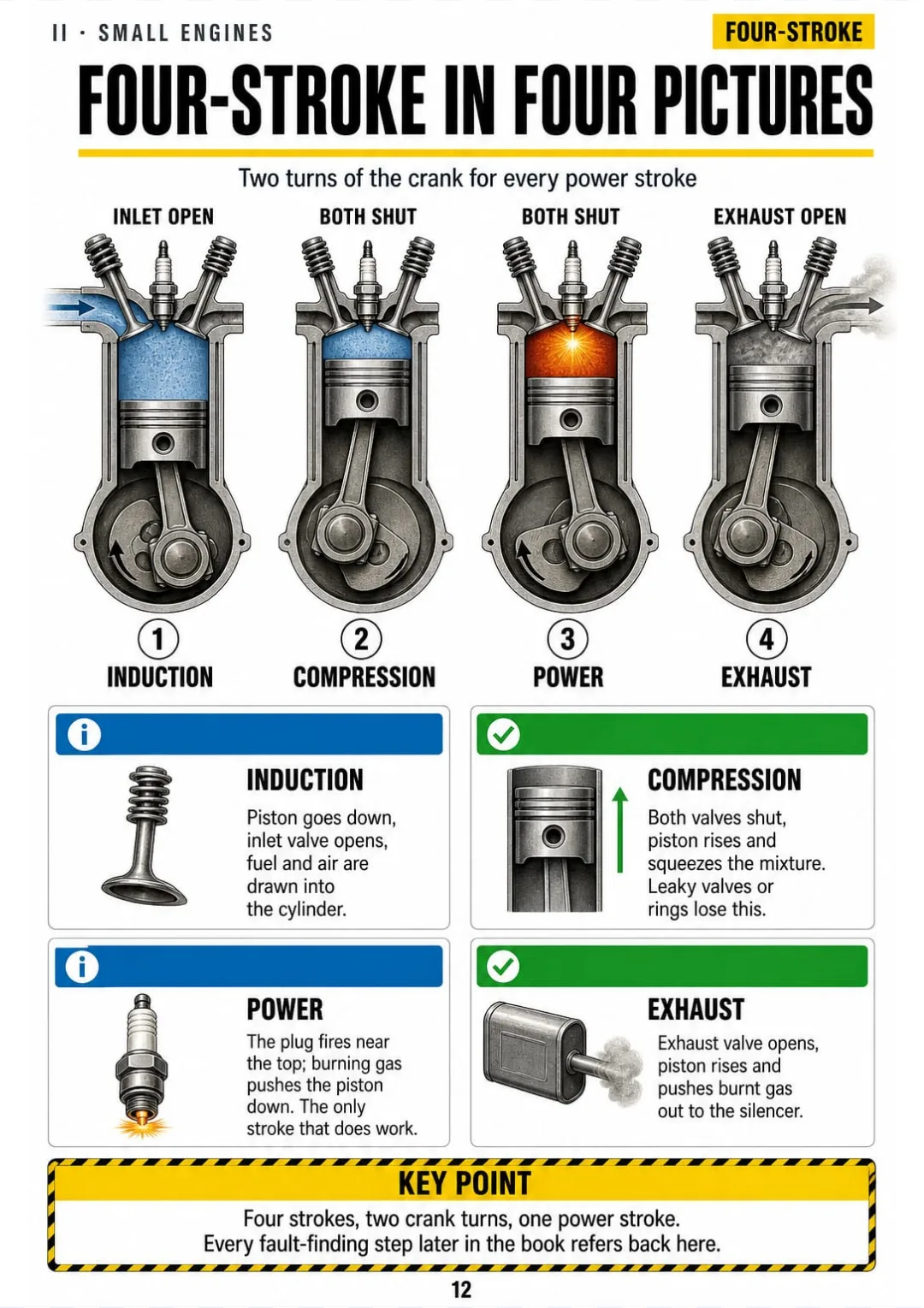
Induction, compression, power, exhaust: two crank turns for one power stroke
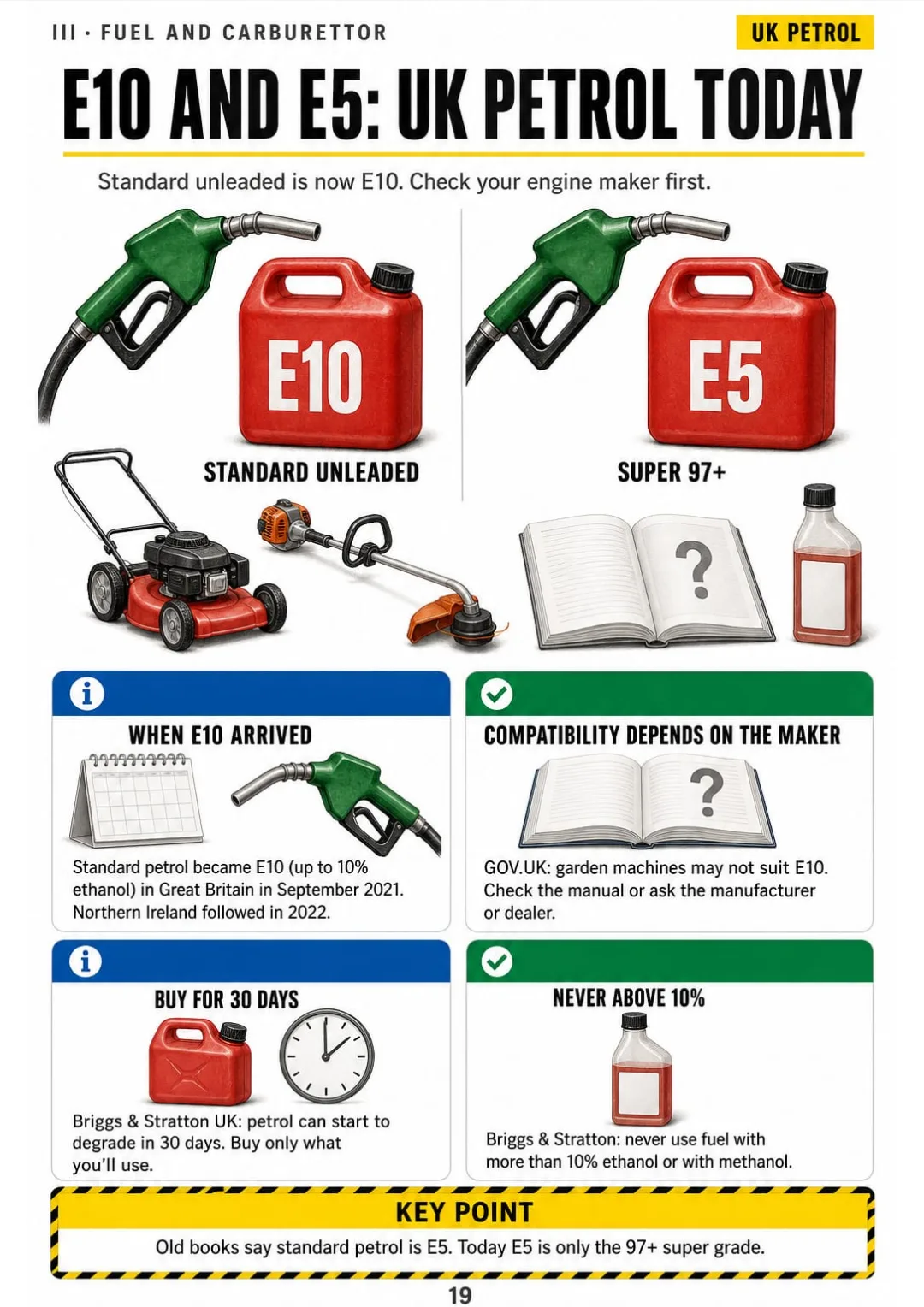
E10 standard since September 2021 in Great Britain; E5 is the 97+ super grade.
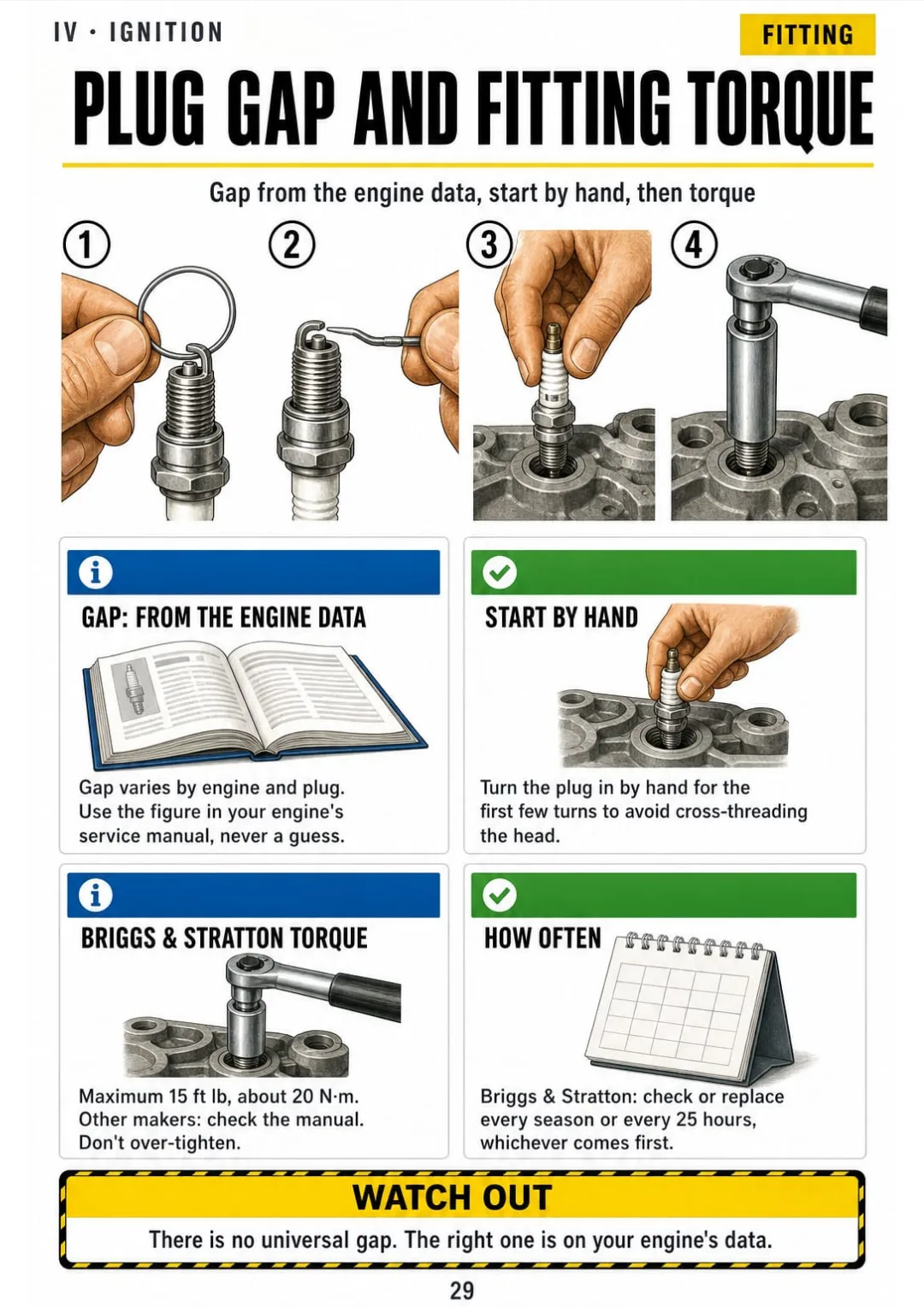
Briggs & Stratton: maximum 15 ft lb (about 20 N·m), every season or 25 hours
Compression test with throttle open, and why the release valve makes readings look low.
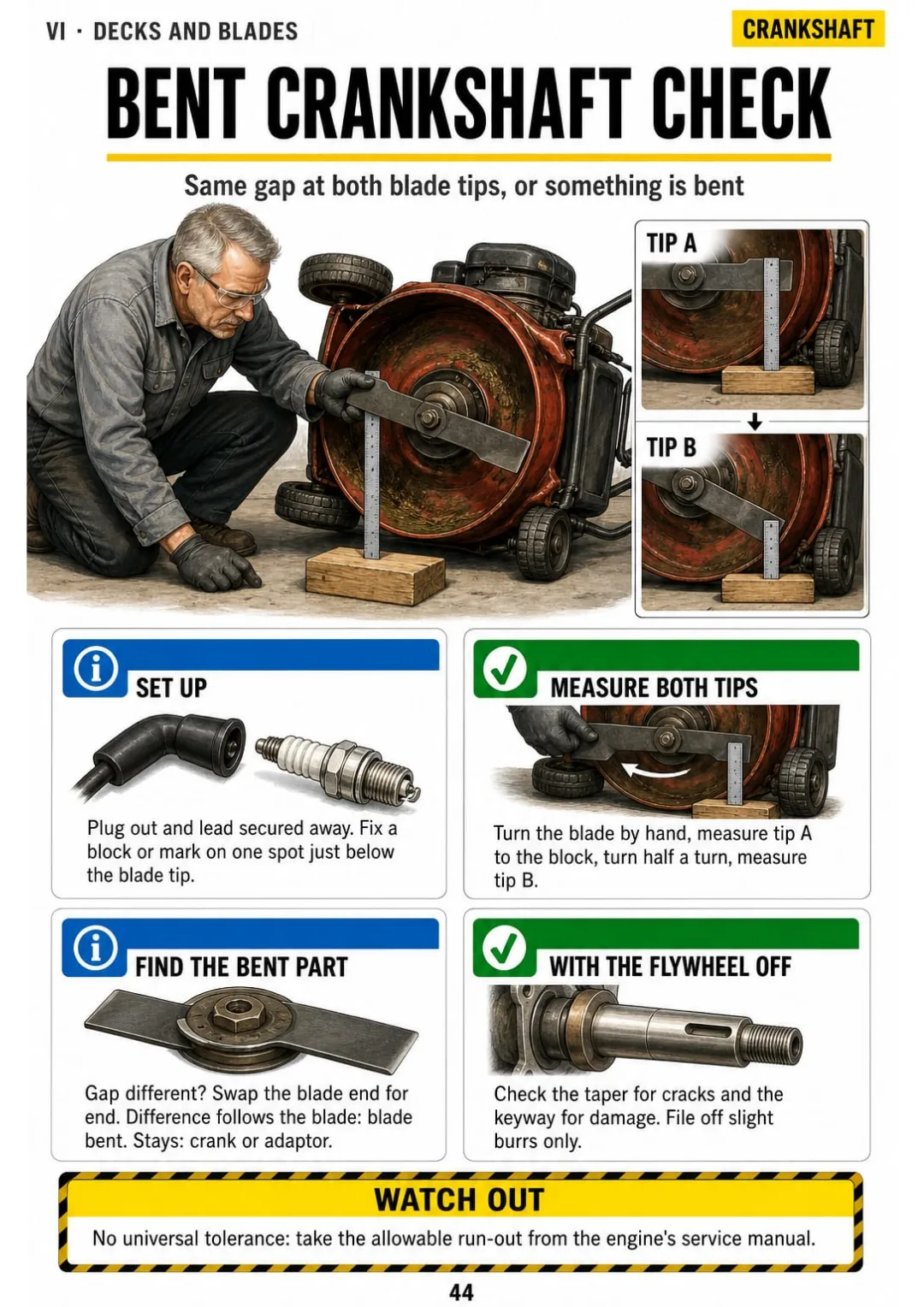
Tip A and tip B to one fixed point: if the gap changes, something is bent
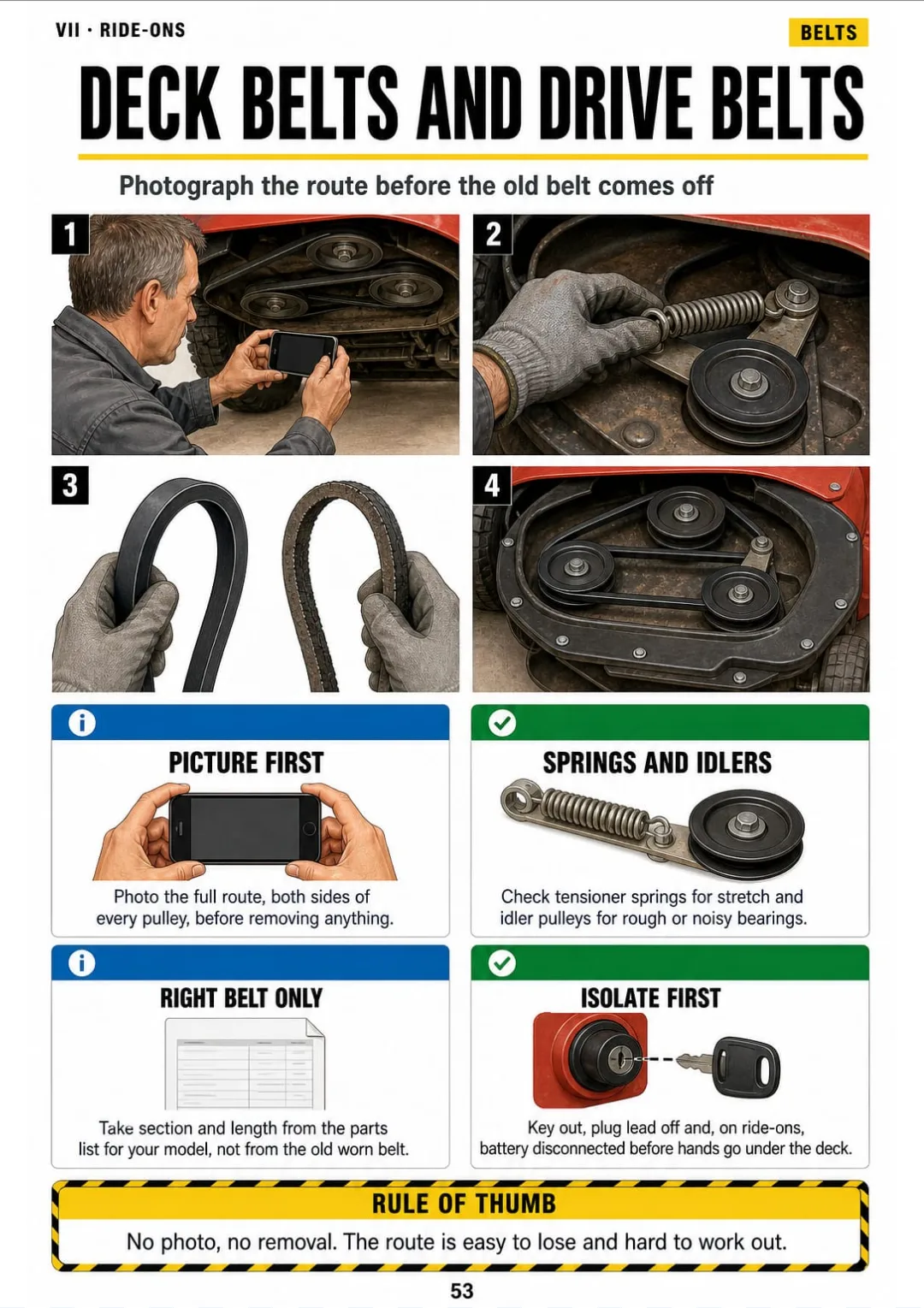
Photograph the route, check tensioners and idlers, fit the belt from the parts list
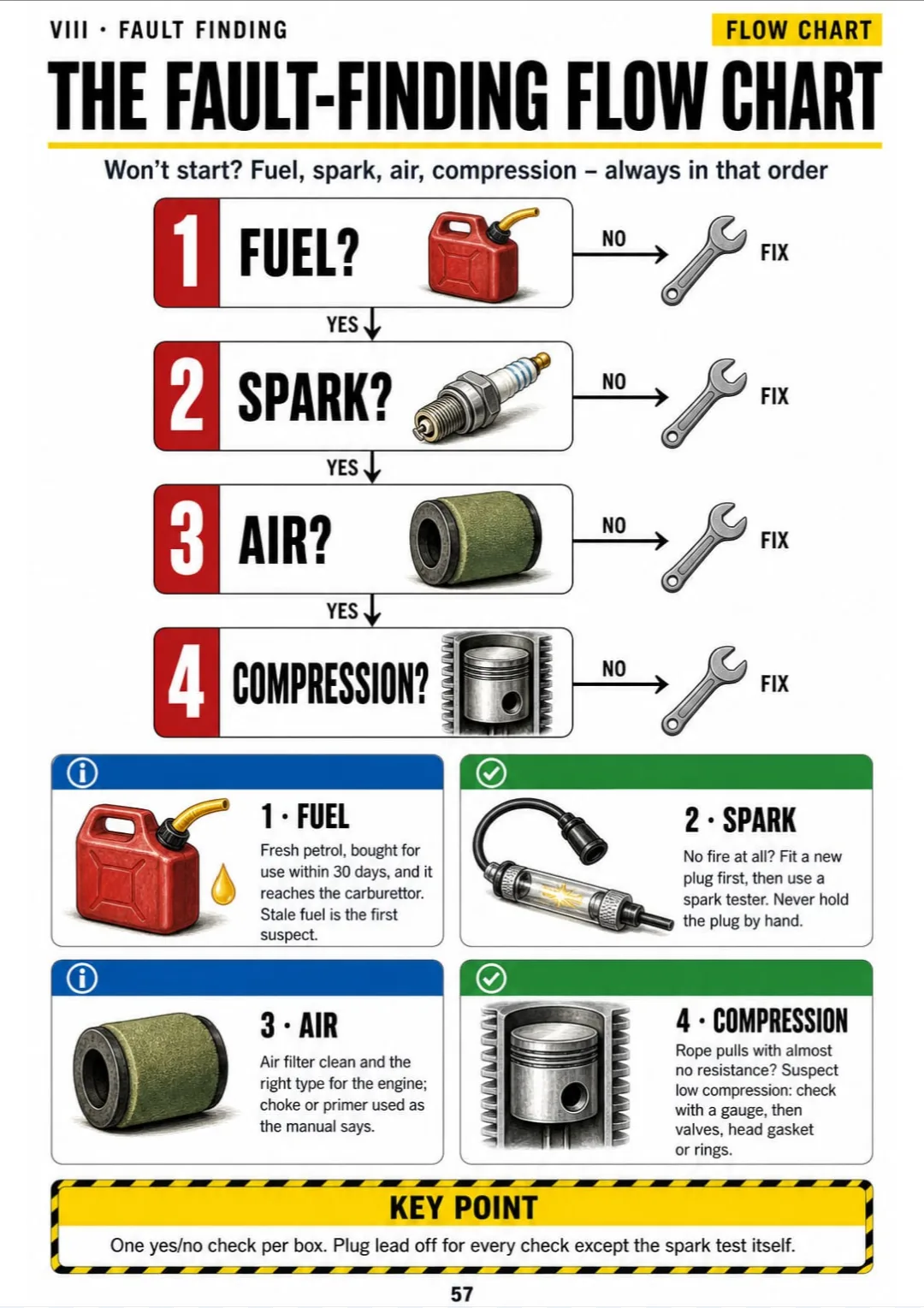
Fuel, spark, air, compression: the four-box chart to pin above the bench

Swipe to see more →

These are real pages from the book. The table of contents is the full one: 8 parts and 60 topics.

The Problem Isn't You. It's How It Was Explained to You.

A customer's mower is on your bench. It sat in the shed from October with half a tank of E10, and now it coughs once and dies.

You know it's the fuel. But what has the ethanol done, and what do you do first? The manual covers it in two dense paragraphs, and the videos disagree: drain it, add a treatment, strip the carburettor.

E10 standard since September 2021 in Great Britain; E5 is the 97+ super grade.

In the book, E10 and E5 is one page: the two grades side by side, what ethanol does when it sits in a tank over winter, and where it leaves its mark along the fuel path. What to check is in a box, flagged against the manufacturer's data.

The same goes for the rest: the four-stroke cycle, the magneto spark, the oil change, the rotary blade, the fault-finding flow chart. Each one has its own page.

You see what happened to that mower and you know the next step, without going back to the manual. And when the customer asks what was wrong, you have the answer.

COMPARE FOR YOURSELF

The Same Topic, Two Ways to Learn It

THIS
  • The manual: line after line
  • Strokes and valves explained in words only
  • You get to the bench still unsure
Where the engine fails to start, it should first be established that fuel of the correct grade is present in the tank and is reaching the carburettor. If fuel delivery is satisfactory, the ignition system should be examined by removing the spark plug and checking for a spark across the electrodes. The air filter should subsequently be inspected for obstruction and, should the fault persist, engine compression should be assessed, bearing in mind that a sheared flywheel key may also give rise to a no-start condition.
FOR THIS
  • The four-stroke cycle in four drawings
  • The strokes and valves in one box
  • You see it and you get it
Induction, compression, power, exhaust: two crank turns for one power stroke
CONTENTS

Take a Look at the 8 Parts and 60 Topics

The workshop safety routine, how a small engine works, fuel and the carburettor, ignition and starting, oil, air and compression, decks and blades, ride-ons and battery machines, and fault finding: 64 pages, all illustrated

ISafe Start: The Workshop Routine · pp. 5-11
  1. The Four-Step Routine: Isolate, Drain, Tip, Diagnose
  2. Isolating the Machine Before You Touch the Blade
  3. Tipping a Mower: Which Side Goes Up
  4. Petrol in the Workshop: Storage and Handling
  5. PPE and the Bench Setup
  6. Vibration and Noise: The Rules Behind Them
  7. Old Oil, Old Fuel and Batteries: Disposal
IIHow a Small Engine Works · pp. 12-18
  1. Four-Stroke in Four Pictures
  2. Two-Stroke in Two Pictures
  3. Four-Stroke or Two-Stroke: Telling Them Apart
  4. Vertical and Horizontal Shaft Engines
  5. The Four Things an Engine Needs
  6. Governor and Throttle: Why the Engine Holds Its Speed
  7. Reading the Engine Label
IIIFuel and the Carburettor · pp. 19-26
  1. E10 and E5: What UK Petrol Does to Small Engines
  2. Two-Stroke Mix Ratios Without Guesswork
  3. The Fuel Path From Tank to Cylinder
  4. Float Carburettor: The Parts That Matter
  5. Cleaning a Float Carburettor in Order
  6. Diaphragm Carburettors on Handheld Machines
  7. Primer Bulbs, Chokes and Cold Starting
  8. Is It Really the Carburettor? Four Checks First
IVIgnition and Starting · pp. 27-33
  1. How a Magneto Makes the Spark
  2. Reading a Spark Plug
  3. Plug Gap and Fitting Torque
  4. Testing for Spark the Safe Way
  5. Setting the Coil Air Gap
  6. The Kill Circuit and Brake Lever
  7. Recoil Starters: Rope, Spring and Pawls
VOil, Air and Compression · pp. 34-40
  1. Oil Changes on a Four-Stroke
  2. Reading the Dipstick Right
  3. Air Filters: Paper, Foam and Dual
  4. Cooling Fins and Shrouds
  5. Compression: What a Gauge Can and Cannot Tell You
  6. Valve Clearances on Side-Valve and OHV Engines
  7. Smoke Colour: Blue, Black, White
VIDecks, Blades and Drives · pp. 41-48
  1. Removing and Refitting a Rotary Blade
  2. Sharpening and Balancing a Blade
  3. After a Blade Strike: Sheared Flywheel Key
  4. Bent Crankshaft Check
  5. Cylinder Mowers: Reel and Bottom Blade
  6. Backlapping a Cylinder
  7. Self-Drive: Cables, Belts and Gearboxes
  8. Wheels, Height Adjusters and Grass Boxes
VIIRide-ons and Battery Machines · pp. 49-56
  1. Ride-on Safety Interlocks
  2. The 12 V Battery: Testing and Charging
  3. Starter Motor and Solenoid
  4. Charging System Check
  5. Deck Belts and Drive Belts
  6. Levelling a Ride-on Deck
  7. Hydrostatic Transmissions in Brief
  8. Battery Mowers and Tools: What You Can Service
VIIIFault Finding and Workshop Practice · pp. 57-64
  1. The Fault-Finding Flow Chart
  2. Case: Starts, Then Dies After a Minute
  3. Case: Surges and Hunts at Full Throttle
  4. Case: Hard to Pull and Kicks Back
  5. Case: Uneven Cut and Strong Vibration
  6. End-of-Season Storage, Step by Step
  7. The Annual Service in One Page
  8. Ten Frequent Workshop Mistakes

One Page, One Topic, All Clear

Think of it this way:

A mower is on the bench, the owner wants it back for the weekend, and it won't start. You need to know where to look first, not take the whole thing apart.

You open the fault-finding flow chart and see four boxes: fuel, spark, air, compression, in that order, with what to check in each one drawn beside it.

Compression test with throttle open, and why the release valve makes readings look low.

The same goes for the carburettor clean, the plug gap, the sheared flywheel key after a blade strike, the ride-on interlocks and winter storage: each one on its own page.

Lawnmower Repair Illustrated is 8 parts and 60 topics, all drawn, ending with the annual service on one page. The two free books take it further: more worked fault cases to practise on, and the workshop mistakes drawn before and after.

What you see drawn, you don't have to memorize.

What's Inside Lawnmower Repair Illustrated:

Ipp. 5-11

Safe Start: The Workshop Routine

The four-step routine, isolating the machine, which side goes up when you tip it, petrol storage, PPE, vibration and noise, and disposing of old oil, fuel and batteries.

IIpp. 12-18

How a Small Engine Works

Four-stroke and two-stroke in pictures, telling them apart, vertical and horizontal shafts, the four things an engine needs, the governor and reading the engine label.

IIIpp. 19-26

Fuel and the Carburettor

E10 and E5 petrol, two-stroke mix ratios, the fuel path, float and diaphragm carburettors, cleaning in order, chokes and primers, and four checks before you blame the carburettor.

IVpp. 27-33

Ignition and Starting

The magneto, reading a spark plug, plug gap and torque, testing for spark safely, the coil air gap, the kill circuit and brake lever, and recoil starters.

Vpp. 34-40

Oil, Air and Compression

Oil changes, reading the dipstick, paper and foam air filters, cooling fins, what a compression gauge tells you, valve clearances and smoke colour.

VIpp. 41-48

Decks, Blades and Drives

Removing, sharpening and balancing a rotary blade, the sheared flywheel key, the bent crankshaft check, cylinder reels and backlapping, self-drive and wheels.

VIIpp. 49-56

Ride-ons and Battery Machines

Ride-on interlocks, the 12 V battery, starter motor and solenoid, the charging system, deck and drive belts, levelling the deck, hydrostatics and battery machines.

VIIIpp. 57-64

Fault Finding and Workshop Practice

The fault-finding flow chart, four worked cases from cutting out to vibration, end-of-season storage, the annual service on one page and ten frequent workshop mistakes.

At the end of the book: Four worked fault-finding cases, the annual service on one page and ten frequent workshop mistakes.


Plus: 2 Free Books

Fault Finding Casebook: Worked Workshop Cases

BONUS 1: «Fault Finding Casebook: Worked Workshop Cases»

Value on its own: US$ 17.90

Practise diagnosis on real-style cases: the symptom, what you check first, and why, so you stop stripping the carburettor when the fault is somewhere else.

Common Workshop Mistakes, Before and After

BONUS 2: «Common Workshop Mistakes, Before and After»

Value on its own: US$ 14.90

The most frequent servicing mistakes drawn side by side with the right way, from tipping a mower on the wrong side to refitting a blade upside down.

Lawnmower Repair Illustrated with 2 Free Books

  • Lawnmower Repair Illustrated: 64 illustrated pagesUS$ 63
  • BONUS 1: Fault Finding Casebook: Worked Workshop CasesUS$ 17.90
  • BONUS 2: Common Workshop Mistakes, Before and AfterUS$ 14.90
  • High-resolution PDF to printIncluded
Total value US$ 95.80
YOUR PRICE:
US$ 27
You save US$ 68.80
YES, I WANT LAWNMOWER REPAIR ILLUSTRATED FOR US$ 27

📄 This is a digital PDF book sent to your email: nothing is printed or shipped.

Secure purchaseEncrypted payment30-day guarantee

PDF by email: We email you Lawnmower Repair Illustrated as a PDF, together with the two free books. It's a single payment: no installments, no extra charges.

Who This Book Is For

You fix mowers in your garage

You fix mowers in your garage

Half the street brings you their machines. The book gives you one routine for all of them, so you stop guessing and start with the right check.

You look after a club's machines

You look after a club's machines

Cylinder, rotary and ride-on, all from one book. Before the season starts, you have the service steps drawn and ready on the bench.

You run a small repair workshop

You run a small repair workshop

A printed reference above the bench, with the figures flagged to check against the manufacturer's data. When the customer asks what was wrong, you can show them the page.

Everything You Get Today

US$ 95.80US$ 27
YES, I WANT LAWNMOWER REPAIR ILLUSTRATED FOR US$ 27

📄 This is a digital PDF book sent to your email: nothing is printed or shipped.

30DAYS
GUARANTEE

30-Day Guarantee

Try Lawnmower Repair Illustrated for 30 days, bonus books included.

We refund everything if the file won't open, if the book isn't what you see here, if you were charged twice or if the email doesn't arrive. Just email us.

You pay once. No subscriptions.

Frequently Asked Questions

Is it for me if I already know my way around a mower?

Yes. It isn't a beginner's book: it puts what you already do into one order, from the coil air gap to valve clearances and the fault-finding chart. It isn't tied to one make: the drawings cover the common vertical and horizontal-shaft engines found on UK machines, with E10 petrol and metric units. Where a figure varies by make, the page shows what to measure and flags it to check against the manufacturer's data.

Where does the content come from?

Machine-specific figures (mix ratio, plug gap, oil grade, blade torque) are flagged to check against the manufacturer's data. Safety and handling follow HSE guidance: PUWER 1998, COSHH 2002, the vibration and noise regulations and the Petroleum (Consolidation) Regulations 2014.

Is it official material?

No. It's an independent illustrated reference. It doesn't come from any manufacturer, the HSE or any standards body.

Does it replace training or the manufacturer's manual?

No. It sits beside them on the bench. For the figures of a specific machine, the manufacturer's data always comes first.

Does it cover my make of mower?

It covers how small engines and mowers work and the order of each job, which is the same across makes. For the figures of your machine, such as plug gap, oil grade or blade torque, it flags what to check against the manufacturer's data.

When and how does it arrive?

As a PDF by email, sent to the address you enter at checkout. The 2 free books come the same way.

Do I have to pay every month?

No. It's a one-off payment. No subscription.

Can I have it on paper?

Yes. The PDF prints well on A4, so you can keep it in a folder in the workshop or pin the flow chart above the bench.

How does the refund work?

You have 30 days. We refund everything if the file won't open, if the book isn't what you see on this page, if you were charged twice or if the email doesn't arrive: just email us.

Before You Close This Page

No more rereading with nothing sticking.

The carburettor clean, drawn step by step and done.

You get to the bench knowing where everything is.

Drawings make studying faster.

The book is right below.

One-time payment: US$ 27 · Guarantee: 30 days · PDF by email

YES, I WANT LAWNMOWER REPAIR ILLUSTRATED FOR US$ 27

📄 This is a digital PDF book sent to your email: nothing is printed or shipped.